“Your worst sin is that you’ve destroyed and betrayed yourself for nothing” — Raskolnikov (Crime and Punishment).
Crime and Punishment follows the former student Rodion Romanovich Raskolnikov who is in crippling debt and living in a small room the size of a closet. He stumbles through his days constantly reminded of his mother and sister, who had funded and helped him stay in university.
Raskolnikov struggles immensely in poverty, and formulates a twisted plan to murder the landlady and pawnbroker Alyona Ivanovna, who is infamous for making deals with her tenants and other desperate souls that ultimately pushes them into further debt as they work to pay her for their stay. As he stumbles drunkenly through streets, watching as peasant folk and police shuffle about, he receives a letter from his mother, who had been sending him money, informing him that his sister would be married off to an older man, souring his mood. He then stumbles into a bar and overhears officers chatter about Alonya. Through their gossip, they inspire Raskolnikov to commit to his plan.
From the earliest point in which the story began, the reader can infer that Raskolnikov had already fallen into his paranoid and hypochondriac state of mind. Raskolnikov, restless and anxious, has a horrible thought creep into his mind: could he really be capable of killing? He believes it’s what must be done, that he would be doing a service to the world; his own ego fuels him to go farther with his plan, to believe that he has the right to take another’s life and, above all else, to believe he is chosen.
Crime and Punishment is a classic, a novel exploring morality, the human mind, and descent into madness—how a miniscule thought could spiral into a crime. Throughout the book, Raskolnikov rationalizes how he is in the right, that his undeniable and destined purpose is that of the greater people of the world, to go beyond law and the average man’s morality, to create a better world. The former student sins and thus tries to endure the suffering to be worthy of it.
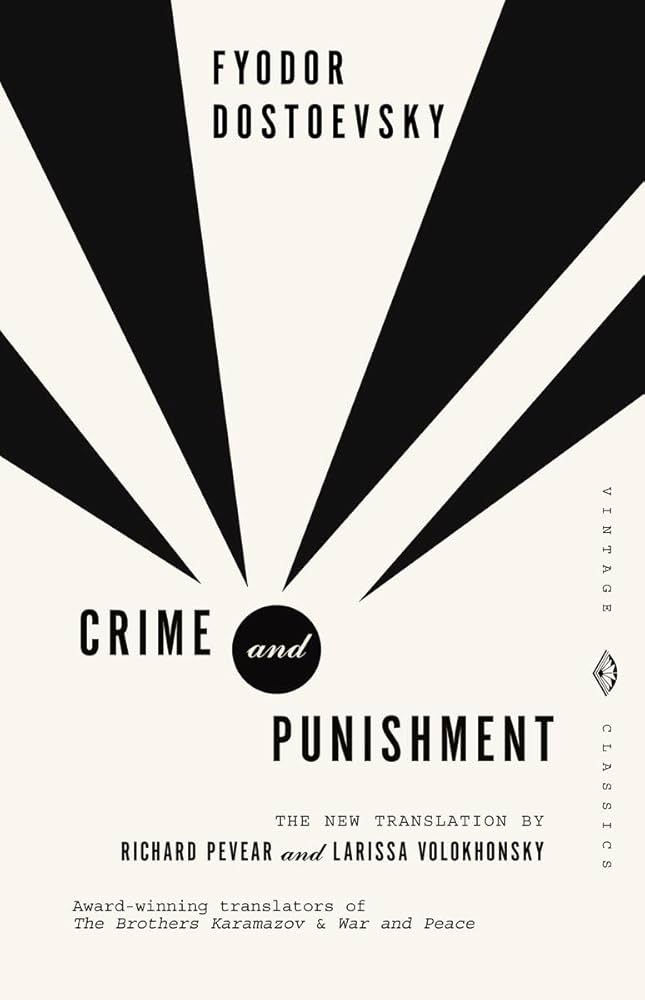
Dostoevsky’s writing delves into the human mind’s darkest corners: the morality of the choices we make, the way that a single thought or action may shape who we are and change us forever. Dostoevsky captures the hysteria and madness that Raskolinkov experiences, and in the Pevear and Volohonsky translation, it stylishly communicates Dostoevsky’s classic while staying true to the original’s tone and writing style. Crime and Punishment is an expertly written and translated novel that has garnered critical acclaim.