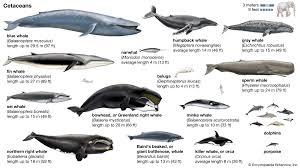
Suborders:
All whale species are known to have long lifespans, ranging from 45-100 years or more. Many whales are endangered, with increasing risk of extinction every year. From overfishing of their food source, habitat loss, pollution, and whaling— some of the largest and most intelligent animals of our planet may be lost.
Odontoceti:
Odontocetes, or toothed whales are a suborder of whales that have conical teeth. This suborder includes groups such as Delphinidae, Phocoenidae, Physeteridae, Ziphiidae, and Monodontidae. It is widely theorized that all Odontocetes possess echolocation. Odontoceti comes from the Greek word “odon” meaning “teeth.”
Delphinidae:
Delphinidae consist of oceanic dolphins and whales. Most notably, an important distinction to make is that all whales are dolphins, but not all dolphins are whales– similarly to how squares are rectangles but not all rectangles are squares.
Phocoenidae:
Phocoenidae, or porpoises, are similar to dolphins, but are in fact much smaller and more closely related to Monodontidae. They are commonly found in bays and estuaries, usually sticking close to the shore.
Physeteridae:
Physeteridae consists of sperm whales and extant species of sperm whales. Sperm whales are large whales known for their diving capabilities and bulbous-gargantuan heads. They primarily prey upon squid.
Ziphiidae:
Ziphiidae are beaked whales, they feed on epipelagic prey. They share similarities to Physeteridae for their tusks, expressing sexual dimorphism where only males of the species possess them.
Monodontidae:
Monodontidae consist of narwhal and beluga. Narwhal express sexual dimorphism by a long spiral shaped tusk, pronounced melon (an organ in the forehead that allows for echolocation), and a low ridge in place of a dorsal fin.
The narwhal’s horn is thought to be an innervated sensory organ which allows them to sense water temperature and water pressure changes.
Mysticeti:
Mysticeti, or baleen whales are filter feeders, using baleen (their namesake), a stiff “brush” of keratin tightly woven together as a means to filter out krill and other small varieties of fish. The whale then forces water into their baleen to push out water whilst keeping their catch.
Balaenidae:
Balaenidae consists of bowhead and right whales. Slow-swimming whales, narrow-arched upper jaw, and short, broad, flippers.
Balaenopteridiae:
Balaenopteridae consist of blue whales, minke whales, humpback whales, fin whales, Bryde’s whales, and sei whales. Balaenopteridae or Rorquals have long rows of pleated skin that run throughout their mouths and part of their throats, which are used to expand the mouth while gulping water to filter in krill or small crustaceans.
The blue whale is the largest animal in the world, growing from 80-100 feet long.
Eschritchiidae:
Eschritchtiidae, or grey whales, were nearly hunted to extinction by commercial whalers. Whales were hunted for their fat/blubber which could be made into oils, and in the Victorian and Edwardian (among previous) eras, their baleen was used in the structures of corset ribbing.
Neobalaenidae:
Neobalaenidae, or the pygmy right whale is the only living member of Cetotheriidae. It was previously classed among Balaenidae, however recent studies have proven it to be part of Cetotheriidae, a sister class of other Mysticeti. It is an extant species that was previously thought to be extinct.